
The Sciences and Spirituality
Maryann Miller, Msc.D.
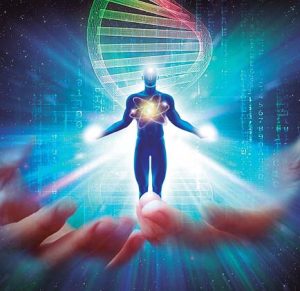 The relationship between science and spirituality is one of the most important conversations of our time. It is also one of the most delicate. When approached carelessly, science can be used to make spiritual claims it has not actually proven. Spirituality can also be reduced to language that sounds scientific but loses the depth of inner experience. Yet when approached with humility, both science and mysticism can deepen our wonder. Each can help us stand before reality with greater reverence, greater honesty, and a more spacious understanding of what it means to be human.
Science and mysticism do not work in the same way, and this distinction matters. Science studies the world through observation, measurement, experiment, mathematics, and repeated testing. Its strength is that it asks for evidence that can be examined by others. Mysticism, at its best, studies consciousness from within through contemplation, meditation, prayer, devotion, ethical refinement, and direct inner experience. Its strength is that it explores meaning, transformation, unity, and the lived reality of awareness itself. One looks outward with disciplined precision. The other looks inward with disciplined attention. They are different ways of knowing, and neither needs to be diminished in order for the other to be honored.
The most fruitful meeting place between science and spirituality is not in claiming that they are the same. It is in recognizing that both, in different languages, invite us beyond superficial appearances. Science has shown that the physical world is more subtle, relational, and dynamic than common sense once assumed. Mysticism has long taught that the self is more than the surface personality, and that life is held within a deeper wholeness. These two approaches do not prove the same conclusions, but they can open a shared doorway into humility, wonder, and reverence.
Consciousness: The Great Meeting Place
One of the most compelling areas of conversation between science and spirituality is consciousness. Every human experience begins with awareness. We see, feel, remember, imagine, love, suffer, question, and seek meaning. Yet consciousness remains one of the most difficult mysteries to explain. Neuroscience has made extraordinary progress in identifying brain processes that accompany perception, memory, attention, emotion, and self-awareness. Still, the deeper question remains: why is there subjective experience at all? Why is there something it is like to be a person rather than only biological processing occurring without inwardness?
This is often called the hard problem of consciousness. It does not mean that science has failed. It means that consciousness raises questions that are unusually profound. Science can describe many of the conditions under which conscious experience appears, changes, expands, contracts, or disappears. It can study sleep, anesthesia, meditation, trauma, attention, and brain injury. What remains difficult is explaining how physical processes become lived experience from the inside.
Here mysticism offers a different starting point. Many wisdom traditions have suggested that consciousness is not merely something produced by the individual personality. They speak of awareness as a deeper field, a ground of being, divine presence, universal mind, or the living essence within which all beings arise. Hindu, Buddhist, Taoist, Christian mystical, Sufi, Kabbalistic, and many Indigenous traditions have all, in different ways, pointed toward a sacred unity beneath the appearance of separation. Their language differs, but their insight often converges around a profound intuition: consciousness is not an accidental side effect of life, but central to the mystery of existence.
Some modern thinkers, including Amit Goswami and others working from idealist or consciousness-first philosophies, have proposed that consciousness may be the ground of being rather than a late product of matter. This is an important metaphysical view, and it resonates with many mystical teachings. However, it should be presented accurately. It is not the established conclusion of quantum physics. It is an interpretation, a philosophical and spiritual proposal that uses certain features of quantum theory to support a larger worldview. That does not make it meaningless. It simply means we must be clear about what science has demonstrated, what philosophy has interpreted, and what mysticism has directly experienced.
What Quantum Physics Actually Contributes
Quantum physics has transformed our understanding of matter and energy at very small scales. It shows that particles cannot always be understood as tiny solid objects moving along definite paths in the way classical physics once imagined. Quantum systems are described mathematically in terms of probabilities, potential states, and relationships that become definite in specific experimental contexts. This is one reason quantum language can feel so suggestive to spiritual seekers. It speaks of possibility, relationship, uncertainty, participation, and the limits of ordinary perception.
Yet scientific care is essential. When physicists speak of a quantum wave of possibility, they are referring to a precise mathematical description of a physical system. When spiritual teachers speak of possibility within consciousness, they are referring to inner potential, creative emergence, and the unfolding of life. These two uses can be brought into poetic conversation, but they are not automatically the same thing. Quantum theory does not by itself prove that consciousness chooses physical reality into existence. It does, however, remind us that the world is stranger, subtler, and less mechanically obvious than the older materialist picture suggested.
The act of measurement in quantum physics is also often misunderstood. In ordinary spiritual language, the word observer can imply a conscious human being. In physics, observation usually means a physical interaction that yields information about a system, often through measuring instruments or environmental interaction. Most mainstream approaches to quantum mechanics do not require a human mind to collapse or create physical reality. This does not close the door on philosophical questions about consciousness and measurement, but it does prevent us from making the overly simple claim that human thought directly determines quantum events.
A careful spiritual reading of quantum physics, then, does not say that quantum mechanics proves mysticism. It says something more modest and more powerful. Quantum physics helps loosen the assumption that reality is made of separate, isolated, self-contained things. It reveals a universe of relationships, probabilities, and interactions. Mysticism, from another direction, invites us to experience life as interconnected, sacred, and inwardly alive. The two are not identical, but they can deepen one another when each is allowed to remain true to itself.
Entanglement and the Spiritual Sense of Interconnectedness
Another concept that naturally attracts spiritual attention is entanglement. In quantum physics, particles that have interacted can sometimes be described by a shared state, so that the properties of one are correlated with the properties of another even when they are separated by distance. Experiments involving entangled photons have shown that nature cannot be fully explained by certain classical assumptions about separate objects carrying pre-existing properties independent of measurement. This discovery is scientifically profound and has helped open the way to quantum information science and emerging quantum technologies.
Spiritually, entanglement is often compared to the ancient teaching that all life is connected. This comparison can be meaningful as metaphor. It can help us imagine that separation may not be as absolute as it appears. It can support a sense of reverence for the unseen relationships that bind the web of life. However, quantum entanglement should not be used to claim that all people are literally quantum-entangled with one another in a way that explains intuition, prayer, telepathy, or human relationships. The physics of entanglement is specific and experimentally constrained. It does not allow ordinary faster-than-light communication, nor does it automatically scale up to the emotional and spiritual bonds between human beings.
Still, the metaphor remains valuable when used honestly. Quantum entanglement shows that separateness is not the whole story of physical reality. Ecology shows that organisms live within webs of mutual dependence. Neuroscience and psychology show that human beings regulate, wound, heal, and shape one another through relationship. Mysticism adds that beneath all forms, there is a deeper unity of life. These are not the same kind of claim, but together they invite a larger understanding of connectedness.
Nonlocality and Nonduality
Quantum nonlocality and spiritual nonduality are often placed side by side. They do have a certain resonance, but they should not be confused. Quantum nonlocality refers to correlations between parts of a quantum system that cannot be explained by ordinary local hidden variables in the classical sense. It belongs to the technical language of physics and is studied through mathematics and experiment. Nonduality, by contrast, is a spiritual realization that the deepest truth of existence is not divided into separate, competing realities. It is an awakening from the illusion that the self is completely separate from the whole.
The similarity is not proof, but it is suggestive. Both quantum nonlocality and spiritual nonduality challenge a simplistic view of reality as a collection of isolated fragments. Both ask us to question the adequacy of surface appearances. Both invite humility. But it would be inaccurate to say that quantum nonlocality proves nonduality. It is more accurate to say that modern physics makes it easier for many people to take nondual spiritual insight seriously, because science itself has shown that reality is not always organized according to the assumptions of ordinary common sense.
In this way, science can become a kind of intellectual preparation for wonder. It does not replace mystical realization, but it can make the mind less rigid. It can help us admit that the universe is more subtle than our habitual categories. Mysticism then invites the heart and consciousness to participate in that subtlety directly, not merely as an idea, but as a lived transformation.
Consciousness, the Brain, and Quantum Possibilities
Some researchers have proposed that consciousness may involve quantum processes within the brain. One of the best-known examples is the Orchestrated Objective Reduction theory associated with Roger Penrose and Stuart Hameroff, which suggests that microtubules within neurons may play a role in conscious experience through quantum processes. This theory is intriguing because it attempts to connect consciousness with fundamental physics rather than explaining it only through classical neural computation.
At the same time, this theory remains controversial. Some researchers have argued that the warm, wet, active environment of the brain would make delicate quantum coherence difficult to maintain in a way that could explain conscious thought. Others have replied that biological systems may preserve or use quantum effects in more subtle ways than once assumed. There is ongoing research into microtubules, anesthesia, and possible quantum effects in living systems. It is fair to say that this area is alive with questions. It is not fair to say that science has proven consciousness is quantum, that consciousness survives death through quantum information, or that quantum theory confirms reincarnation.
This distinction is important for spiritual integrity as well as scientific integrity. The continuity of the soul, the survival of consciousness after death, and the existence of higher dimensions of being are profound spiritual teachings. They may be known through revelation, inner experience, near-death experiences, mystical testimony, or sacred tradition. But they have not been established as conclusions of quantum physics. When we honor this distinction, we do not weaken spirituality. We strengthen it by refusing to depend on scientific claims that science itself has not confirmed.
Quantum biology does show that some living processes may involve quantum effects. Research has explored quantum-related mechanisms in photosynthesis, enzyme reactions, olfaction, and magnetoreception. This is fascinating and important. It suggests that life may use the subtle laws of physics in ways science is still learning to understand. But quantum biology does not automatically mean that all spiritual experience is quantum in nature. It gives us a more refined appreciation of life, not a blanket proof of metaphysical doctrine.
Intersubjective Knowing and Shared Meaning
The original bridge between science and spirituality may not be quantum physics alone. It may be the recognition that human beings live through multiple modes of knowing. There is objective knowledge, which seeks what can be publicly observed and tested. There is subjective knowledge, which includes direct inner experience. There is also intersubjective knowledge, which arises between conscious beings through shared language, practice, compassion, ritual, and community.
Mystical traditions have always included this intersubjective dimension. A spiritual path is rarely only private. Teachings are tested in the lives of practitioners. Communities preserve methods of contemplation. Teachers guide students. Compassion becomes visible in action. Wisdom is recognized not only by what a person claims to have experienced inwardly, but by the quality of life that experience produces outwardly. Does it lead to humility? Does it deepen love? Does it strengthen service? Does it make the person more truthful, more present, and more free?
Science can study some of these outward effects. It can examine changes in the nervous system during meditation. It can study the benefits of compassion practices, prayer, gratitude, forgiveness, and meaning-making. It can observe how relationships affect health and how attention shapes perception and behavior. But the sacred meaning of these practices is not exhausted by what can be measured. A brain scan may show what accompanies meditation, but it cannot fully contain the inner meaning of communion, surrender, illumination, or union with the Divine.
Intention, Gratitude, and Participation in Reality
Spiritual teachings often emphasize intention, gratitude, and present-moment awareness. These teachings remain powerful, but they do not need to be justified by misusing quantum mechanics. It is common to hear that because observation affects a quantum system, human intention can directly change external reality at the quantum level. This is not a careful scientific claim. Quantum measurement is not the same as personal intention, and physics has not shown that our emotions or thoughts directly select quantum outcomes in everyday life.
What can be said with confidence is still profound. Intention changes how we perceive, choose, speak, act, and relate. Gratitude changes the atmosphere of consciousness from lack to receptivity. Present-moment awareness interrupts the automatic patterns of fear and conditioning. Compassion changes the field of relationship. A coherent inner life can influence the world through the body, the voice, the choices we make, the service we offer, and the presence we bring into every encounter.
From a spiritual perspective, intention may also participate in subtler dimensions of reality that science has not yet learned how to measure. Many traditions teach that prayer, blessing, visualization, and focused love have effects beyond ordinary causality. These teachings deserve respect within their own spiritual context. They should be presented as spiritual knowledge, contemplative practice, and lived testimony, not as settled quantum physics. In this way, the sacred remains sacred, and science remains honest.
A Better Bridge Between the Sciences and Spirituality
If we wish to bring the sciences and spirituality together, the strongest bridge may be broader than quantum physics. Physics teaches us that matter is subtle and relational. Biology teaches us that life is interdependent. Ecology teaches us that no organism exists alone. Neuroscience teaches us that experience is shaped by attention, emotion, memory, and relationship. Psychology teaches us that meaning, trauma, love, and belonging profoundly influence human development. Systems science teaches us that wholes cannot always be understood by reducing them to separate parts.
Mysticism adds the interior dimension. It teaches that the deepest transformation is not merely conceptual. It is experiential. It asks us to become still enough to know ourselves beneath the restless mind. It invites us to recognize the same light of being in others. It teaches that wisdom is not only information, but illumination. It reminds us that knowledge without love can become cold, and love without discernment can become ungrounded. The sciences can help spirituality remain clear, careful, and humble. Spirituality can help science remain connected to meaning, ethics, reverence, and the sanctity of life.
The goal, then, is not to force science to prove mysticism, nor to force mysticism to sound scientific. The goal is a more integrated human understanding. We can allow science to tell us what it has actually discovered. We can allow mysticism to speak from the depth of awakened experience. We can recognize that both are needed in a time when humanity has great knowledge but often lacks wisdom, great technology but often lacks reverence, great power but often lacks inner alignment.
A Note on Scientific and Spiritual Language
The quantum ideas in this article are used carefully. Entanglement, nonlocality, superposition, measurement, uncertainty, and coherence are scientific concepts with precise meanings in physics. They can also serve as thoughtful metaphors that help us loosen overly rigid ideas about separateness, certainty, and fixed identity. The spiritual message is not that quantum physics proves every mystical teaching. Rather, quantum physics reminds us that reality is more subtle than ordinary appearances suggest. It invites humility, wonder, and a renewed willingness to explore the relationship between consciousness, matter, life, and the greater wholeness in which we participate.
When science and mysticism meet in this spirit, neither is misused. Science is honored as a disciplined search for reliable knowledge. Mysticism is honored as a disciplined path of inner realization. Together they can help us become more awake, more responsible, and more reverent before the mystery of existence.
Conclusion: Wonder With Discernment
The relationship between the sciences and spirituality invites us into a larger vision of reality. It does not ask us to abandon reason. It asks us to use reason in the service of wisdom. It does not ask us to reduce the soul to physics. It asks us to recognize that the physical universe itself is filled with mystery, relationship, and depth. It does not ask us to prove God with equations. It asks us to stand before both the seen and unseen dimensions of life with humility.
Science and mysticism are most powerful when they meet through wonder with discernment. Science teaches us to be careful about what we claim to know. Mysticism teaches us to become still enough to encounter what cannot be grasped by intellect alone. Science reveals the astonishing intricacy of the cosmos. Spirituality reveals the sacred meaning of our participation in it.
Together, they invite us to live as conscious participants in a universe that is not merely a collection of objects, but a living field of relationship. They call us to honor the mystery of consciousness, to respect the interdependence of all life, to cultivate gratitude, and to act with wisdom and love. The deeper purpose of bringing science and spirituality into conversation is not to win an argument. It is to awaken a more whole human being, one who can think clearly, love deeply, serve generously, and live in reverence for the one luminous mystery expressing through all.
Other Science and Spirituality Articles
Quantum Physics/Mechanics and Humanity’s Interconnectedness
The Everything Answer Book, How Quantum Science Explains Love, Death, and the Meaning of Life
Sources for Scientific Information
These sources were consulted to keep the scientific relationships clear and appropriately qualified.
- The Nobel Prize in Physics 2022: materials on entangled photons, Bell inequalities, and quantum information science.
- Stanford Encyclopedia of Philosophy: entries on Quantum Entanglement and Information, Philosophical Issues in Quantum Theory, Decoherence, Quantum Approaches to Consciousness, and Consciousness.
- Hameroff, S., and Penrose, R. Consciousness in the universe: A review of the Orch OR theory. Physics of Life Reviews, 2014.
- Reimers, J. R., McKemmish, L. K., McKenzie, R. H., Mark, A. E., and Hush, N. S. The revised Penrose-Hameroff orchestrated objective-reduction proposal for human consciousness is not scientifically justified. Physics of Life Reviews, 2014.
- Tegmark, M. The importance of quantum decoherence in brain processes. Physical Review E, 2000.
- Marais, A. et al. The future of quantum biology. Journal of the Royal Society Interface, 2018.
Brookes, J. C. Quantum effects in biology: golden rule in enzymes, olfaction, photosynthesis and magnetodetection. Proceedings of the Royal Society A, 201