Character and Decisions
The Value of Character in Decision Making by Hasan Aga
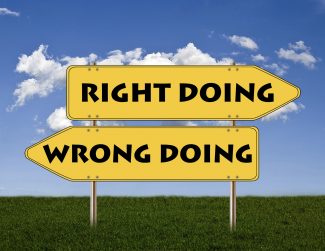 As a young man who is yet to ‘find his way’ so to speak many people take it upon themselves to give their opinion on what you should be doing with your life under the banner of advice. Which is not necessarily a bad thing. Yes it can be frustrating at times when you know that they are unable to relate with you due to differences of thought and situation, however it is still appreciated because of the good intention and alternate perspective.
The actions that you do decide to take are the culmination of the process of decision making. And that process consists of all the elements important to yourself as well as what is deemed necessary in order for you to progress and succeed. A priority list essentially.
The significance of each aspect of decision making varies from person to person. What stage they’re at in their lives, what situation they are in and the makeup of their personality all play their part in influencing the process.
When you have a family it is natural that your decision making is heavily based around what is best for them and finance is closely linked to that. Even when you don’t have a family, finance still usually features prominently which makes sense as that is what is needed to survive in today’s society but many of the other elements differ wildly.
Though you are always growing and developing throughout your lifetime the first thirty years is when the foundation of your life is laid down and the structure is put into place. With the first twenty years being heavily influenced by your parents the following ten years or so, when you make your own decisions and commit your own mistakes is a very crucial time for the person you eventually become. You are old enough to be completely independent yet young enough to not have any major responsibilities in your life. It is a period where you venture out on your own and the quality of your experiences and the teachings of those experiences act as your foundations’ strongest pillars. Those are the teachings which you revert back to later on and prove to become invaluable.
Opportunities come with great regularity. Opportunities for life, for love, for career, for travelling and living in new countries and experiencing different cultures. They come thick and fast and when faced with so much and so many different options, it can become overwhelming. Particularly if you are still unsure on what it is you want to do.
Our society generally puts a lot of pressure on us to not waste time and make a decision as quickly as possible so that you can get on with it. So with that one of the most common pieces of advice given is one which stems from the Career First school of thought.
 When making any major move the primary consideration should be how it will affect your career. The other elements of it consist of how much money you will make, the saving potential, the type of life it will allow you to live and of course how will it help you climb up the career ladder. Sound enough as far as advice goes; stable, safe, predictable.
Sometimes however the career aspect is often given too much importance. If you choose to accept a job you must stay in that job for ideally two years or at the very least one. Future employers want to know that you won’t just up and quit when the going gets tough. They want to know that you are reliable amongst all other things. Any length of time less than that and questions will be asked and eyebrows will be raised. They will want to know why you left so early and doubts will enter their mind to question if the reason why you may have left was to do with you. So whenever you do settle on an opportunity, if you don’t enjoy it, grit your teeth and bare it for the sake of your career.
You must always ensure that whatever step you take next agrees with your Curriculum Vitae (CV). You can’t take too long of a break otherwise, again, questions will be asked; Why did you take so long before finding another job? What did you do during that time?
It’s impressive the amount of power future employers assume they have. It’s even more impressive how much power we let future employers have.
However the truth is, if you want to progress in that world, then this is what you must adhere to. Plan your life with your CV in mind. Take decisions based on how it will appear on the paper which is a snapshot of who you are professionally. And if you don’t like the rules then just don’t play the game. Which is fair enough. What is unfair though is that this way of thinking is often portrayed as the right way of thinking and near enough the only way to success.
Amongst all the various ways of thinking and aspects of decision making there is one which is highly underrated and rarely given the importance it deserves. And that is the impact a decision has on your character. In such a frenetic and electric world our eyes are constantly trained on what is happening and our thoughts are trained on how to stay ahead, if not at the very least on how to keep up. So it is very easy to forget the benefits of looking within. Our association of success with strictly quantifiable, worldly achievements have become so synonymous with one another that we have forgotten to question how any act of significance impacts our person.
 We take into account the money, the lifestyle, the status, the networking opportunities, but we never take into account how the option in question will aide us in our personal growth. How will it assist in shaping you. How will it make your personality stronger. What skills will you learn. What qualities will you develop. Will you become more patient or empathetic or confident etc.
Why do we never place any value on such things. Because this way of thinking does not help you make money? Maybe not in the short term, but in the long term it will help you make more than just money. It will help you become successful as a person. Let me explain.
When constructing a building the most important thing to ensure is that you spare no expense or effort on the structure. If the structure, the foundation, the essence of the building itself, is solid then the probability of the rest of it being equally as impressive is much higher.
Similar to an architects huge influence on a building by way of design, your parents and family hold most responsibility for instilling many of your core values. However it is still up to you to ensure that everything down to the smallest of details is done assiduously. The buck must stop with you. At the end of the day, it’s your building. It’s your character.
If you prioritise becoming as well rounded a person as possible during this time then you stand in good stead for the rest of your life. In a perfectionists mind you aim to become a jack of all trades and a master of them all.
By putting your character first you aim to ensure that your core is as strong as it can be and therefore, by way of logic, if the base is strong then whatever comes after will be able to fit well. If during this period your focus is on making your character one to be proud of then success should follow naturally.
If analysing a group of young people and trying to predict who you feel will grow up to be a successful person then you look at their personality. You see who is balanced and who has the qualities and skills to achieve. Some qualities are inherited however most are learnt and developed through experiences so it is imperative to keep that in mind when thinking about what should be your next step. If you do not work at it, it will not grow.
In terms of both quality and quantity spending the majority of that period working your way up the ranks in one organisation or career will undoubtedly make you a specialist in that profession but the consequence of that dedication is a lack of balance when comparing it against the wide array of life skills you could be acquiring by way of travel, immersing yourself in new cultures, different jobs and getting yourself out of your comfort zone. If anything it could be argued that committing yourself to one specialist profession without a well rounded base in place is more risky as you are putting all your eggs in one basket. If the basket breaks…you’re in trouble.
Not only is it completely acceptable to think of your character when making decisions, but given how little we do, it is something we should actively and consciously do for our own benefit. If you ever sit down and truly break down the honest reasons behind a lot of our ambitions, often you will find the answers being closely linked to pleasing others. Be that other people individually or society as a whole. Many times we do it subconsciously because of the social system we live in and though achieving something to please someone else is not impossible by any means, it is a lot harder then if you want to achieve something for yourself. The number of people whose ambition is to become a multi millionaire, as opposed to simply being financially stable is a very common example.
This way of thinking can be seen as risky as it can potentially lead to some of your choices being viewed as not following a natural, chronological, orthodox pattern however the logic behind this theory is one which deserves a lot more consideration then what it is often given.
As young adults we find ourselves in a world which is changing rapidly and consists of an increasing amount of pressure to be a certain way and achieve certain things by a certain time. And you should achieve those things if you want to, but you should also question what impact it will have on the person you are. You owe yourself that much.